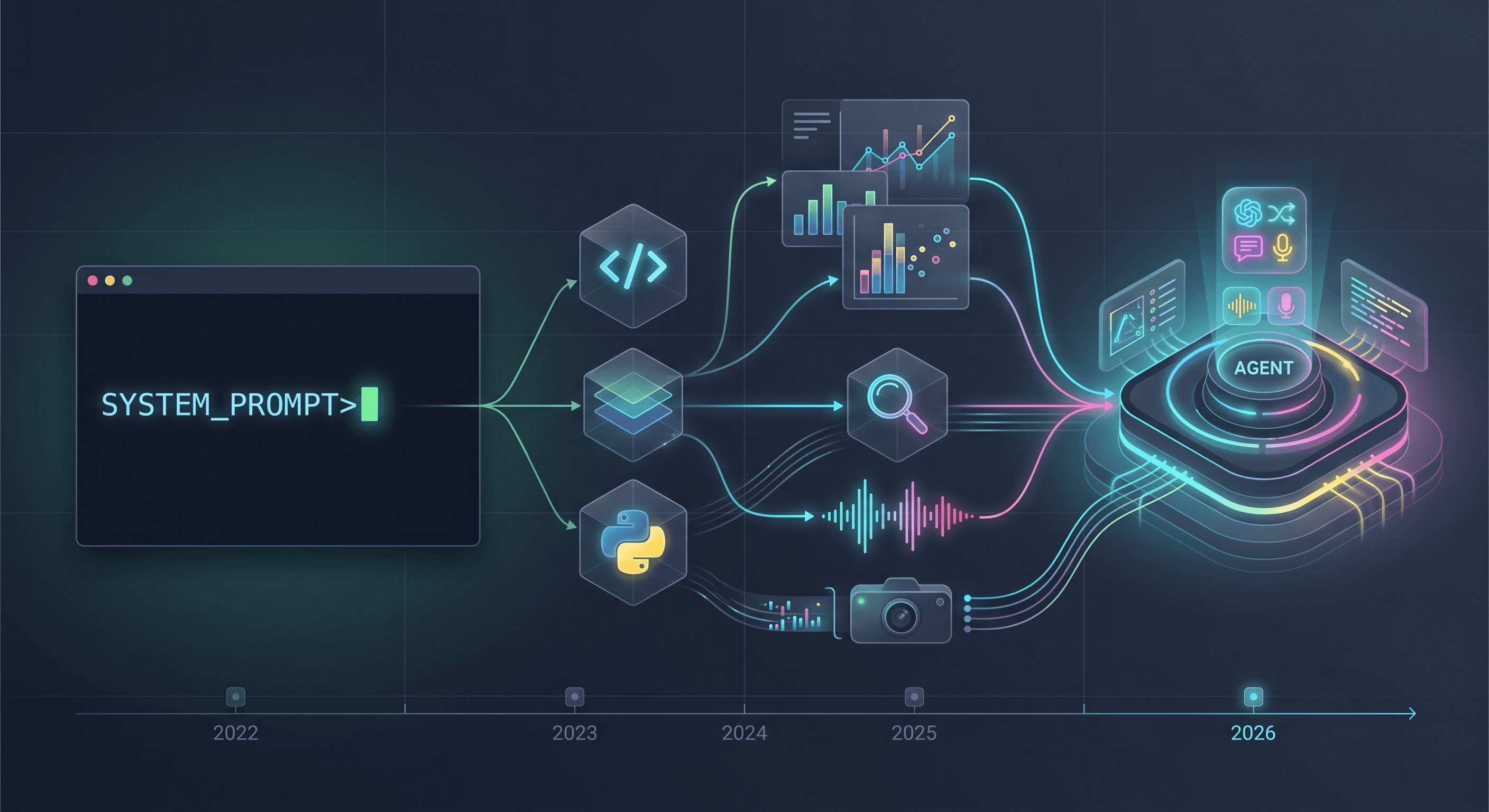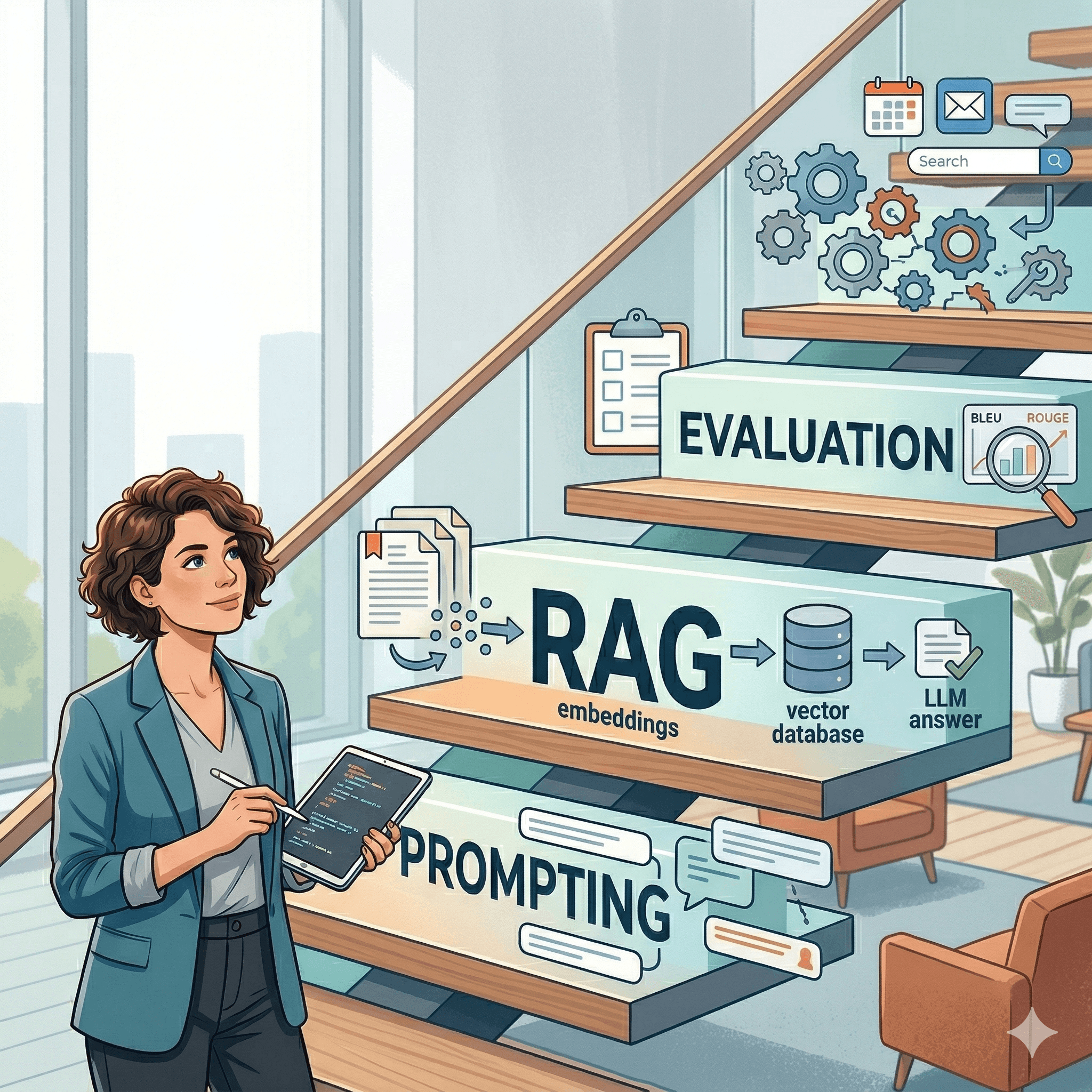



The data scientist's core mission hasn't changed: we turn messy signals into business truth. But in 2026, the speed at which we do it has changed dramatically.
A few years ago, a typical project meant a morning lost to regex and an afternoon fighting visualization syntax. Today, the conversation isn't about "replacing" the scientist; it's about compressing time-to-insight from days to minutes.
The best part? You don't need a dozen new paid subscriptions or a bloated stack of experimental packages. Whether you're in a locked-down enterprise environment or a scrappy startup, the AI-augmented workflow is fundamentally a mindset shift in how you handle code and logic.
A Quick Note on What You Still Need to Know
Before we get into the workflow: this is not a permission slip to stop learning Python.
The AI-augmented data scientist is not a "vibe coder" who prompts their way through an analysis without understanding what's happening underneath. That approach works until it doesn't…
…and when it breaks, it breaks silently and in production.
Here's the more useful distinction: Foundational understanding vs. Syntactic recall.
You still need the concepts: You need to know how vectorization works, what a join actually does to your row count, and the difference between data leakage and overfitting. You need enough Python to be a good reviewer, not a human compiler.
You no longer need the syntax memory: You don't need to memorize pd.merge() arguments or matplotlib twin-axis boilerplate. These are lookup tasks; the kind of "friction" that used to cost 20 minutes per session and added zero intellectual value. While you don’t need to memorize thousands of arguments, you should understand the purpose behind major functions.
The Rule: Know the concepts. Delegate the syntax. That’s the bar.
1. EDA: Moving from "Syntax First" to "Question First"
Exploratory Data Analysis used to be a ritual of repetitive boilerplate. In 2026, we've moved to a Natural Language First approach.
Instead of hunting for the exact pandas syntax, you describe the insight you need. Whether you're using a built-in assistant in Snowflake or Databricks, or just pasting a schema into an LLM, the goal is rapid prototyping. You ask, "Show me the distribution of churn by region for users who joined in Q3," and let the AI generate the initial code.
You aren't cheating. You're skipping the 10 minutes of manual coding to get straight to analyzing the result.
2. Data Cleaning: Offloading the Janitor Work
AI doesn't make data clean automatically, but it makes the cleaning logic effortless to write.
Pattern-based code generation: AI is exceptionally good at fuzzy logic. Need to standardize 50 variations of "United States" or parse inconsistent date strings? Don't write the regex yourself. Describe the pattern to an AI assistant and let it generate the cleaning function.
Self-healing pipelines: Many enterprise tools now offer AI-suggested fixes for schema drift. Even without those, you can use AI to write validation checks—unit tests for your data—that catch errors before they reach your model.
The Guardrail: AI-generated cleaning code is like a first draft from a junior developer. It's 90% there, but you are the Chief Reviewer. "Almost correct" is dangerous when it comes to data integrity.
3. Feature Engineering: The Ultimate Brainstorming Partner
AI acts as your Senior Pair Programmer here, surfacing features you might have overlooked.
The "What Else?" Factor: Describe your metadata to an AI and ask: "What non-obvious features could I derive from these timestamps and transaction amounts?" It might suggest Velocity of Spend or Time-Since-Last-Peak-Activity: ideas that trigger your domain intuition rather than replace it.
Contextual Logic: Instead of manually calculating rolling averages or lags, describe the business logic and let the AI produce the optimized SQL or Python to execute it.
4. Modeling & Reporting: Closing the Last Mile
AI has fundamentally changed the "last mile": communicating the why.
The Translation Layer: One of the most underrated uses of AI is translating model interpretability (like SHAP values) into plain English.
Input: Complex model weights.
Output: "The model is primarily looking at Account Age and Last Login to predict churn; marketing should focus on users older than two years who haven't logged in for 10 days."
Automated Narrative Drafting: Use cloud-native "AI Insights" as a foundation for distilling insights for your executive presentations, leaving you more time to focus on strategic recommendations.
The Reality Check: Where AI Fails (and You Step In)
AI is a world-class executor, but a mediocre strategist.
The Context Gap: AI doesn't know your business history. It doesn't know a revenue spike was a one-time data entry error. You are the Guardrail of Intent.
Plausibility vs. Truth: LLMs write code that looks professional and runs without errors, but can still join on the wrong primary key. If you can't read the code, you can’t catch obvious mistakes.
The Accountability Gap: You cannot tell a stakeholder, "The AI made that choice." You are the Ethical Anchor responsible for ensuring the model aligns with the problem at hand, regulations, and common sense.
The 2026 Reality: Meeting the Workflow Where It Lives
Function | Modern Workflow |
|---|---|
Logic Generation | LLMs (Claude, GPT, Gemini) for boilerplate and unit tests. |
Cloud-Native AI | Assistants in Snowflake Cortex, Databricks, or AWS for SQL/Python. |
Automated EDA | Generating profiling code via AI rather than manual calls. |
Reporting | AI-assisted drafting of executive summaries and model explanations. |
The Mindset Shift: From Coder to Architect
The data scientists winning in 2026 aren't the ones who write the best Python. They're the ones who ask the best questions. When you offload the how (syntax) to AI, you finally have the mental bandwidth to focus on the why (business logic).
AI is a force multiplier for people who already know what they're doing. It’s not a substitute for understanding the problem; it’s a force multiplier for solving it once you do.
The goal isn't to work less. It's to work on better problems. AI is a tireless, talented coder. Use it like one.


Chris Bruehl
Analytics Engineer & Lead Python Instructor
Chris is a Python expert, certified Statistical Business Analyst, and seasoned Data Scientist, having held senior-level roles at large insurance firms and financial service companies. He earned a Masters in Analytics at NC State's Institute for Advanced Analytics, where he founded the IAA Python Programming club.